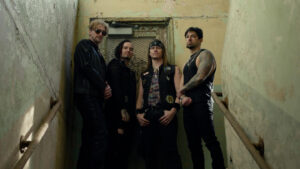
Metal Contraband’s Chelsea spoke with Adam Easterling of Orthodox when the band released A Door Left Open, their latest album via Century Media. Check it out below:
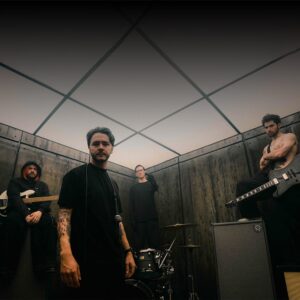
Chelsea here on the phone with Adam from Orthodox. How are you doing today?
Doing awesome. Thank you so much.
Congrats on the release of your new album, A Door Left Open. It’s out this month on Century Media Records. So first off, how are you feeling now that it’s out?
I will say that it’s kind of a huge relief to put a record out. When it’s your fourth LP and all that, I’ve kind of just learned that it’s nice to acknowledge that once it’s out there’s nothing I can do about it. So you just kind of let it go *laughs*.
Just throw it out into the void, kind of, right?
Exactly.
That’s funny. No, definitely not reaching a void, though. You guys have got a very strong fan base. And you released three singles before the actual album, and you have music videos for all three of them, so I want to start by digging into the singles that we heard before we got the grand reveal of the album. The most recent was “Keep Your Blessings”. So let’s start by digging into that track.
Song-wise, that track is, I would say arguably the musically wildest thing we’ve ever done. Austin, our guitarist, his brain works like a computer when it comes to music. I don’t really understand it. He kind of, I mean, he worships the band Car Bomb, as we all do, which if you’re familiar with that band at all, then you can hear that song and be like, “Oh, yeah, that makes sense”. Really just musically kind of just came to being…we had, let’s see, I think everything through the first chorus done, or maybe even up to the first chorus done and we didn’t really know where to go with it and then we kind of figured out the rest as we were in the studio and it just kept getting crazier and crazier and crazier. And when that song was finally completed, I think all of us were like, that has to be a single. And the more people we sent it around to, to kind of just see, make sure we weren’t in our own heads about certain things, people more and more were like, “No, this song is great. It’s amazing”, this that and the other. Because I was personally a little worried that maybe it was going to go over some people’s heads because it is so technically nuts. Me being the singer, I’m very fortunate that I don’t have to play an instrument on it, and that most of the song that I have to sing on is in 4/4 for the most part, so like I can at least follow it, but in terms of the music video that was actually all our drummer Mike. That was his idea. The storyline and all that, all kind of came from his head, and we went to our buddy Errick Easterday who shot our music video “Body and Soul” back in the day, and he’s done countless work for, you know, name a Metalcore band specifically from, you know, the southeast or the east coast and he’s probably had something to do with something they’ve done over the years. He, I mean, absolutely knocked it out of the park with that production, but I think the wildest part of that, the story with that video for me is the opening sample of the video where it talks about, “my hands aren’t mine anymore”. So Mike, our drummer, actually, he does like housing foundation work when he’s home, and one of his coworkers just randomly said that one day. And he said he just turned to look at him and just started writing it down. He said, “say that to me one more time”. Just started writing it down because he was like, “that is an insane thing that you just said to me”.
That’s so cool. It’s funny how inspiration can really come from those random things sometimes. That sparked the whole song. And I love that you guys knew that that was going to be a single right away, because you know, once in a while you’ll talk to a band and be like, “Oh, so why was that one the single?”, and sometimes they’ll be like, “Oh, we’re not sure, you know, the label kind of chose that one, we didn’t really know which ones to pick…”, but the fact that you guys had that creative control of like, you heard the song, you’re like, “Okay, this is a single”, that’s great.
Yeah, I think a lot of bands all the time, you hear about people being on labels and labels are headaches, but it has to be this song, it has to be this song, and we’ve never had that experience, and I don’t…I don’t know that it would end well for a label to try to bring that argument to the table with us because we’re pretty headstrong, so.
And then for the single “Sacred Place”, speaking of creative control, you were actually the producer and assistant director of the music video, so talk to me about stepping on the production side of things, and the vision for that song.
Oh man, I don’t know if I would really call myself either of those things. It’s really just like, we kind of had a mad dash to get that one put together. But really the idea behind that was just, I wanted it to be focused on an individual as being chased through this house and there’s all these people and you can’t tell how many people there are, or this that and the other, and you know, there’s just all these faceless intruders of sorts. And then I wanted it to be very dark, and then there’d be flashes of light here and there, so that you can sort of see the scenery around what’s happening. But I kind of wanted it to be in the sense of how traditional horror movies, it’s always this real old house with all these big wood furnishings, all these different things. And I was like, I think it’d be kind of crazy if like when we, you flash and you see the house, you’re like, oh wow, this house is really nice. So we shopped around for a bunch of different homes in like some of the more wealthier parts of Tennessee just to see who would let us in to shoot this very weird thing. And it was funny because the people who owned the house were super, super sweet and accommodating. And whenever we actually put on like the costume with like the mask over the face and all this stuff, and it was the first time we really saw it in person, I instantly had to take a picture and send it to them and be like, “hey, you need to let your neighbors know that if they see this, it is us, because this looks really scary and we’re probably going to be in the woods, and I really don’t need the cops getting called”.
Oh my God, that’s funny. No that’s great, I mean it definitely gave horror short vibes the first time I watched it, so that’s really funny, but the fact that hearing the behind-the-scenes kind of adds a slight comedy element to it, too, like you guys are just running around being like, “please don’t get us in trouble”.
Yeah, it’s always so funny because, I don’t know, you see how serious and insane it all looks, when you see what the camera captures, what you don’t realize is like, one of the final sequences where it’s me walking towards the camera…What you don’t see is that Nick Chance who’s shot, I think like seven or eight of our music videos at this point, is backing up while the girl who’s featured in that, Majeska, is rotating a hunter’s flashlight and then Ben, our guitarist, is rotating the other one, and they’re gradually getting closer and closer together because the hallway they’re in is getting narrower and narrower, and they’re like bumping into each other, almost falling over, while we’re trying to take this like super serious looking shot. It’s just like, the calamity that happens behind these situations is always so funny.
So funny, all the awkwardness behind the extreme metal music videos, right?
For sure.
That’s awesome. And then of course you had another cool music video with “Searching for a Pulse”, which had a different team for that video, I believe. So what thoughts can you share on that one?
So that one was with Anthony Altamura who plays bass in that awesome band up from New York, Stray From The Path. He was actually the first music video we ever shot that had, like a true crew with it. We showed up, and they were building this set in this warehouse on Long Island, and I mean, it had like different production designers and managers. They had, like, some catering stuff there, and all this stuff. And it was super awesome accommodations. It’s so cool to have all these different people working on the one goal for the project. And it was just so funny that it just so happened to be in this uninsulated warehouse on Long Island in February, and it was 16 degrees outside, and I think it was about 16 degrees inside the warehouse too. So it was almost like everyone super into it all this, but if you actually look at any promos that we took from that video shoot, you can see that our noses are red because it was so cold the entire time. But overall, that video turned out like a horror movie, it was so cool. The idea was because the song itself is based around this kind of reoccurring nightmare that I would have whenever I was leaving for tour. I just would always have this dream that I’d be wherever, and I’d get a call that the house was on fire, and I’d make it back in time just to overcome varying obstacles to get home in time to see that the house was like in ashes and my dog was still inside, and all this different stuff. Just my brain being like, “Hey, just remember you’re powerless to what’s happening at home now”. So when we started talking about what we wanted the music video to be about, he was like, we should make it about a sleep paralysis demon. The makeup and effects and all that stuff was shot separate of us, so I didn’t actually see any of that stuff getting done. So when he sent us the cut of the girl, done with the makeup to look like a demon, I was like, wow, this is actually terrifying.
And what a choice, also a terrifying choice to do New York in winter, honestly. That’s a pretty rough situation.
Yeah, I told him the next time we do one together, it’s gotta be at a pool. It’s gotta be poolside during the summer.
There you go. But also shout out Long Island, because that’s where I’m from.
Awesome.
Well, yes, let’s also dig a little bit more into your background as well, because Adam, your vocals are very powerful, and very unique and perfect for the extreme kind of metal you guys are making. So how did you first discover and dig into this side of your voice?
In terms of digging into this side of my voice, I always loved early Slipknot Corey Taylor, early John Davis, just whenever, really before they were on the radio and pressured to hold back a little bit, and they were just completely ferocious. And between them and Coal Chamber, Mudvayne, and all that kind of stuff, I loved that era of Nu Metal and how all of it sounds very insane in points, and some of it doesn’t even sound like they’re trying to sound good. They just want it to sound painful. So it’s just been kind of a journey in regards to figuring out what I wanted to sound like, pulling from those sorts of things. But one of the harder things for me was that I was never a kid that watched YouTube videos on how to do vocals the right way. I just picked up a microphone and started screaming one day, and wasn’t doing it right for the last 10 years of the band. And so right before we went in for this record, I called up a guy named David Benitez to do some vocal lessons because I’d heard really, really good things from my friends, Emma in Dying Wish, or Brian in Knocked Loose. I know that, I think my buddy Matt from Kublai Khan took a lesson from him as well. Then Randy, our producer, was like, you’ve got to go to this guy. He was like, it’ll change your entire approach. And within three lessons, I was able to really lock into what, in my opinion, sounds the most powerful and I guess, raw sound that I’ve ever had in recording with this band for the last 10 years. So that was a huge step in terms of progress for myself and I can definitely attribute a lot of that to my friend David for that.
Very cool, that’s great. It’s good because you kind of, you had the natural ability to do this style of music, and you had the power for the screaming to begin with, so it wasn’t necessarily that you needed the lessons per se, but it was that it helped you shape and form it a little bit more and kind of got you on a slightly different track that honestly just unleashed more power, right?
Yeah, it was nice. What’s funny is if you listen to, I guess like, Sounds of Loss and Let It Take Its Course, our first two LPs in particular, that was when we really started to try to do the more Nu Metal stuff. If you are able to find our previous releases to that, it’s a lot more leaning in the hardcore direction. But once we started doing the weirder sounds, I kind of leaned into the talking side of the Nu Metal voice to alleviate myself from having to yell all the time in hopes that maybe it make it easier for me to tour off and so on. Being able to just approach it with, you know, pedal to the metal the entire time was just like a very free and liberating, ⁓ which I guess is kind of the same words, but it just opened up a whole new world of approaches that I can make towards being a vocalist in a band, because there are so many parts where I’m like, okay, this would be the ideal approach, but I don’t know that I can do that, so what am I gonna do? And having this set of tools in my bag now, makes it to where whatever I want to try, I know I can at least try it now. And that’s a huge relief, honestly, more than anything, because the band itself has just been gradually getting crazier and crazier as the years have gone on. So to find a way to be able to progress myself with them, without having to hold an instrument, has been really nice for myself, I’d say.
For sure, very cool. And good job with it. As far as I’m hearing, you’re absolutely killing it. So awesome job on that. Of course, you also mentioned your producer, Randy [LeBoeuf], well-known name in the metal community for sure, so want to talk about what he brought to A Door Left Open?
Randy, I don’t know that it can be said enough how big of an influence Randy is, both directly and inadvertently in the ways that bands can create. Obviously, you have the moments where Randy will actually weigh in and pick up a guitar and say, what if we try something like this? Or he’ll program a different drum line so we can try something else here and there, this and the other. Just knowing, especially after doing one record with him, but just knowing that once we’re there, if we’re unsettled on something, he’s gonna be able to help us get across the finish line. That in and of itself takes so much pressure off of writing the music itself, which then lends to a better product, and then also kind of opens up your mind to be able to take bigger risks, because you know that if it’s really close to being where it needs to be, he’s probably going to know the answer to get it there, or if it’s terrible, he’s just gonna be like, “hey, this sucks, we should do something else”. Yeah, I can’t speak enough to how great of an influence he is on every aspect of the writing process, whether he’s directly involved in it or not.
Very cool. And that’s great to have that kind of open honesty too. You know, like not a producer is just pushing you being like, “yeah, yeah, sounds good”. He’s genuinely being “like, no, actually, I think that’s not good. We’ve got to change directions”. Having that open honesty in the studio is definitely important.
I don’t know of a single band that has gone to Randy that hasn’t had like a tense moment with him, but there’s also, it’s kind of cool that there’s almost like this like clique within itself…Not a click because that sounds like it’s gatekeeping, but touring bands, if you’ve done a record with Randy, you feel like “Oh, we have a really cool thing in common”, because not every producer lends the kind of experience that he does, and not every band really has a sound…he can make any band sound good, but his brain lends to such cool ingenuity that he really shines when it’s a band that’s kind of out of the box. And that’s where you have bands like Boundaries that have done a record with him, where every record just sounds crazier and crazier. Same thing with Chamber, even Kublai Khan. Everything just sounds like a level up in the last thing they did with him. And I think it’s because he’s able to really bring out the people that aren’t just following what works.
Now, you also seem to be someone who is multi-talented in the music industry. I mean, you have your hand on different sides between writing and performing, of course, but also production and also promotions as well. So how did you find your way into that extra side of the music world?
I’ve never done any actual production in terms of, within the studio, aside from just like lending notes to friends here and there but in terms of promotions. ⁓ I run a promotions company called AM/PM Booking here in Nashville. It was kind of something I was grandfathered into, it was just that a few of my friends back in the day started this company so that we could continue to have hardcore shows coming through the city. As they got older and kind of fell out of doing it, they sort of handed the reins off to me. And it’s just something that, I’ve always booked shows here and there, but it was something that I started taking more seriously and doing more frequently with AM/PM. I want to say we started doing…actually, conveniently, we started doing it right in 2019. So we had about a year of me doing it before the world shut down, but then we started picking it back up around 2022. And it’s been going pretty strong ever since.
Yeah, that’s definitely awkward timing, but it’s not like anybody could have known, so it’s good that you were able to kind of pick it back up afterwards, and it’s great because in a way that keeps you connected with your own metal community as well. You know, you’re doing your own thing, you’re making your own music but you’re also helping out other bands who have a vision and trying to get out there too.
It’s honestly, it’s a really cool way for me to be able to stay in touch with what is happening at the communal level because Orthodox, as much as we rep Nashville as a city, we don’t get to play in Nashville very often just because we have to tour. With that comes the sides of radius clauses, supply and demand, all that different stuff where it becomes a business. Being able to stay at the grassroots version of it, where I get to book brand new bands for their first show, or bands that are coming through that just need to get on the road in front of 50 people for it to be a success, it’s a very rewarding aspect in the sense that it reminds me of where all of it started for me, but also it’s rewarding in the sense of being reminded of how far we’ve come with Orthodox.
Yes, that’s awesome. Do you keep it kind of strictly within the Metal world in terms of types of shows that you book?
I would say more in the Alternative universe. It’s majority Metal and Hardcore, but I’m trying to think of some other…We had Trauma Ray I helped with last year, which is a Shoegaze band. I’ve got a show for a band called Daisy Head coming up in July, but it all kind of stays under that Alternative sort of counterculture umbrella for the most part, whether it’s an Emo band or a Metal band or a Hardcore band, it all kind of falls into that underground, like all rooted within Punk in some way.
Now, of course you guys have a very busy month or two coming up. You got an upcoming headline tour, just about to head on the road for that starting with your album release show on the 21st. So how much of the new record will we be hearing for these new shows?
Quite a bit, actually, when we started making the setlist out. I think we’re playing…hold on, I’m in front of my computer, I can just click the piece of paper that I made that has it. We got here, seven of the songs off the record, so a little over half of the record is going to be played on this tour and we kind of deliberately, I mean A, it’s the A Door Left Open tour, so you’ve got to play what’s on the new record. It’s always scary to go out and know that you’re going to play a lot of songs that you haven’t played in front of people before, because you don’t know what’s gonna work, but you’re going to get your best reactions no matter what when you are the headliner. That’s just how it’s built for you to be that way, but it’s good to do…This is almost like I’m giving advice to anybody else that’s doing a record tour, but it’s good to put all of that out there on the first run out, because what we’re kind of doing right now is testing the waters to see like, hey, what songs were we right about in terms of reaction, and which songs do we think are going to be awesome, but then kind of flop because you don’t want to bring those to the support tours where you have less time to build your momentum and you’re trying to win more people over because they’re not necessarily there to see you? So, excited to play seven-twelfths of the record but also kind of stressed to do so at the same time.
No, I mean, like I said, from all the online feedback that’s out there already, everybody’s loving everything they’re hearing so far. I think you guys are going to absolutely kill it, and nothing to be too stressed about, but that is definitely good advice for sure. It’s like kind of a test run of, you know, the live feedback of the record and see everybody’s reactions and everything and plan your everything else out from there moving forward. So definitely good, good advice for other bands as well. But I think you guys are going to absolutely kill it. Thank you so much for taking the time to talk with me today. It’s been absolutely awesome getting to know more about Orthodox, about you, and your journey so far, so thank you so much.
Yeah, of course, thank you.